
The short answer
A garage door is the largest moving opening in most homes, and when wind gets behind it, the whole assembly can buckle, pop off its tracks, or flex inward enough to let a storm push into the garage and strain the walls and roof around it. The fastest way to protect yours before this fall and winter's wind and rain arrive is simple: tighten and inspect the hardware holding the door to the frame — hinges, track brackets, roller carriages, and the weatherstripping along the bottom and sides. Do this now, before the first Santa Ana wind event or winter storm rolls through, and you avoid dealing with a jammed or damaged door in the middle of bad weather.
Why the garage door is a home's weakest wall
Every other exterior wall in a house is a solid, continuous structure tied into studs, headers, and foundation. A garage door is not. It's a large panel of lightweight steel, aluminum, or wood sections, hinged together and held in tracks by rollers and a handful of brackets. That span of surface area acts like a sail: wind pressure that a solid wall shrugs off can push a garage door inward or suck it outward, depending on which way the gusts are blowing against the house.
Once a garage door flexes or comes off its track, it stops doing its job as a barrier. Wind-driven rain gets in, debris can follow, and in a strong enough gust the door can detach from the opener entirely. That's why insurers and contractors treat garage doors as a structural weak point, not just an appliance — and why a few hours of inspection before storm season is worth far more than a repair call during one.
Getting ready for Santa Ana wind events
Late fall into winter is when Orange County sees its strongest offshore Santa Ana winds — dry, gusty, and often arriving with little warning. These winds don't just rattle a loose door; over repeated events they loosen fasteners, wear rollers, and can work a marginal track connection completely free. Before the next wind event, walk through this:
- Track alignment: Open and close the door slowly and watch the tracks. Any wobble, grinding, or visible gap between rollers and track means the door isn't running true and is more likely to jump the track under wind pressure.
- Roller condition: Cracked, flat-spotted, or badly worn rollers should be replaced before they fail. Nylon rollers are quieter and hold up well to the wide temperature swings here; steel rollers need regular lubrication to avoid binding.
- Hinges and fasteners: Check every hinge and track bracket for loose or stripped screws. Vibration from wind and normal use backs these out over time, and a loose bracket is often the first thing to give way in a gust.
- Reinforcement struts: Wider double doors benefit from horizontal struts across the panels, which stiffen the door against wind load. If your door doesn't have them and you're in an exposed spot, this is worth asking about.
- Manual release and backup power: Know where the emergency release cord is, and if your opener doesn't have battery backup, consider adding one — wind events here often come with power outages.
Winter rain, drainage, and salt air
Once the wind settles, the rain follows, and a door that survives gusts can still fail from water intrudes at the bottom seal. Check the rubber astragal along the bottom of the door and the weatherstripping on the sides for cracking, gaps, or flattened spots — these compress over the dry season and often need replacing before the first real storm. Make sure the slab or driveway slopes away from the door opening; pooling water at the threshold will find its way under a worn seal no matter how good the door itself is.
If your home is close enough to the coast to get salt air, keep an eye on the bottom panel seams, hinges, and any exposed steel hardware for early rust — a quick coat of silicone spray or light lubricant on hardware goes a long way between the dry, dusty summer and the wet winter. Wood garage doors need the same attention at the bottom rail, where moisture collects and causes rot if the seal has failed. And if your door and opener hardware haven't been touched since before any earthquake retrofit work on the house, it's worth having a technician confirm the opener brackets and header reinforcement are still solid — retrofit work sometimes shifts framing enough to affect door alignment.
Springs under extra strain
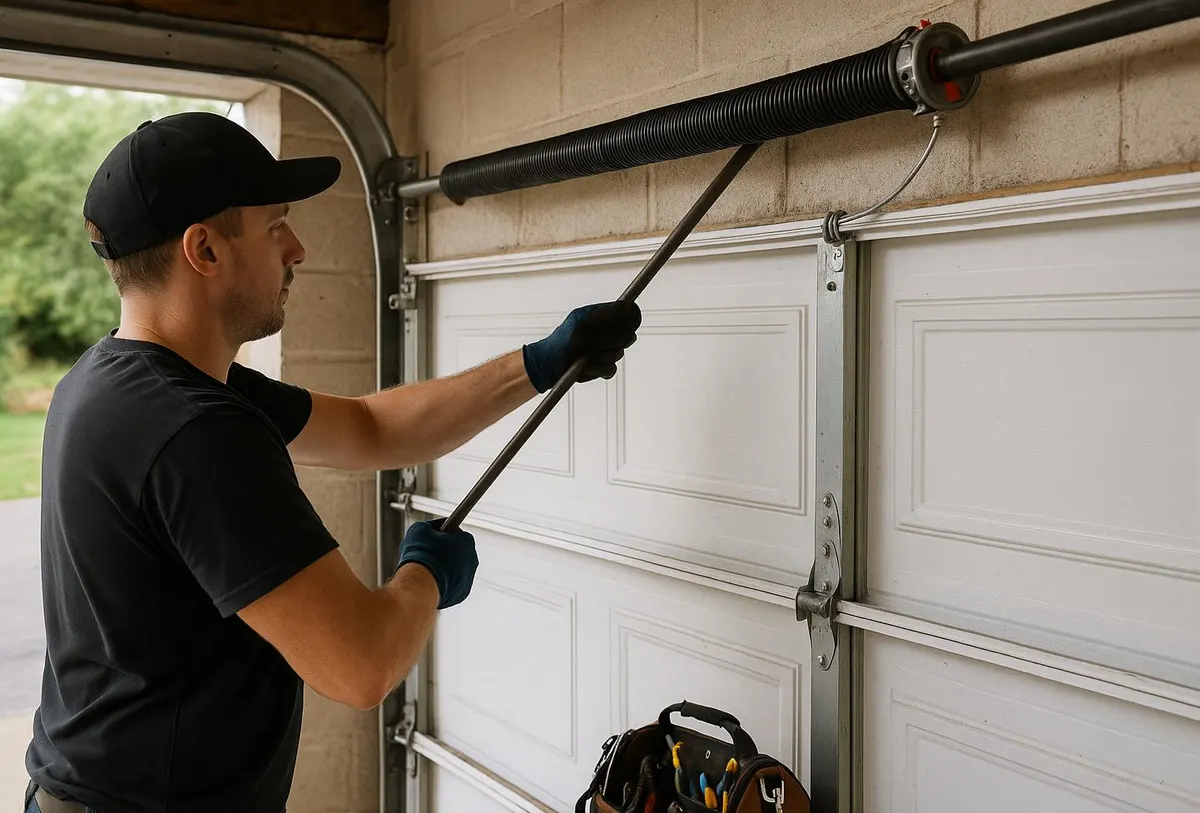
Wind doesn't just push on the panels — it adds extra load every time the door opens and closes during a storm, and that extra cycling puts more stress on torsion or extension springs that may already be near the end of their service life. A spring that's been fine all summer can snap during a winter storm simply because of the added strain. If your springs are original to an older door, or you've noticed the door feels heavier than usual, getting them inspected before the wet season is cheaper and safer than a surprise failure when you need the door to close against driving rain.
When to call Fountain Valley Garage Door
If you hear grinding when the door moves, see visible gaps at the tracks, notice the bottom seal pulling away, or just want a second set of eyes before the first big storm, that's the time to call. Our technicians handle garage door maintenance tune-ups that cover tracks, rollers, hardware, and seals in one visit, and we do spring replacement on the spot when a spring is worn past a safe margin — no guessing, no upselling. If a storm does catch you off guard and the door won't open, close, or has come off its track, our emergency garage door service covers that too.
Don't wait for the first storm warning to find out your garage door isn't ready. Call Fountain Valley Garage Door today to get your door inspected and storm-ready before the wind and rain arrive.